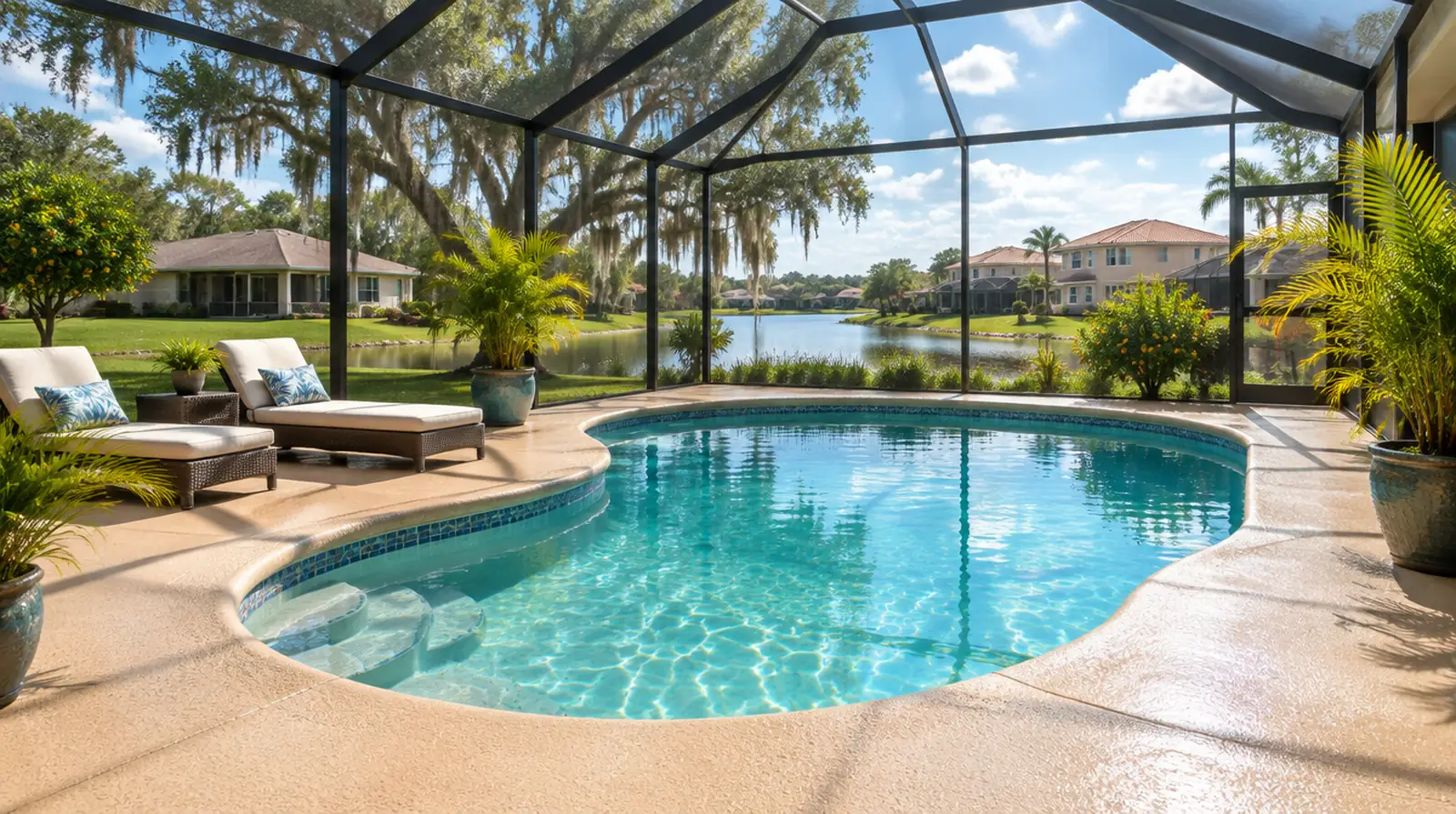
Outdoor concrete has a hard life here
Pool decks, patios, sidewalks and pavers face constant moisture, intense sun and organic growth. Summer rain soaks them most afternoons. Shade from live oaks keeps some areas damp long enough for black mildew and algae to take hold. Irrigation water with high iron content leaves orange rust stains along walls and walkways. Sun bleaches decorative coatings and stains. Without protection, outdoor concrete looks old fast.
A quality sealer slows all of that. It reduces water absorption, resists stains, makes cleaning easier and helps colors stay rich. It is one of the most affordable ways to protect a large outdoor area.
Types of sealers we use
Penetrating silane and siloxane sealers. These soak into concrete and pavers, repel water and leave the surface looking natural. They do not change traction or add gloss and last several years. Ideal for driveways, sidewalks and plain concrete.
Acrylic sealers. These form a thin film that enhances color and adds a satin or gloss look. Popular on pool decks with decorative coatings and on stamped patios. They need reapplication every two to three years in full sun.
Paver sealers. Formulated to stabilize joint sand, reduce weed growth and resist ant activity while enhancing paver color.
Polyaspartic and urethane topcoats. For high-performance outdoor areas, these offer the most durability and UV resistance, often used over flake lanai floors.
Preparation before sealing
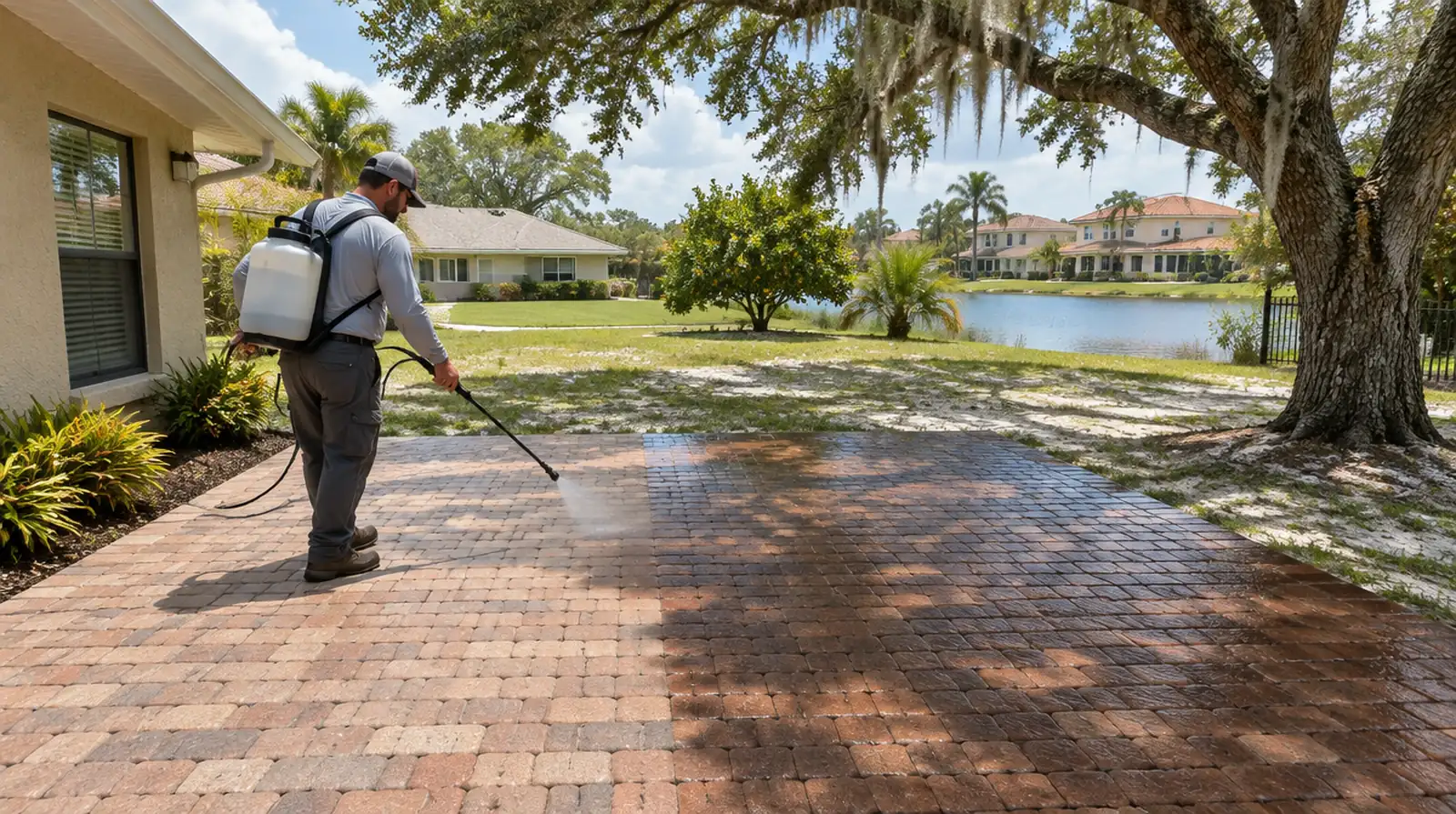
A sealer locks in whatever is on the surface, so cleaning comes first. We pressure wash with appropriate tips and surface cleaners, treat mildew and algae with a cleaning solution, and remove rust stains with specialized cleaners that will not damage the concrete. Old failing sealers are stripped. Cracks can be filled for appearance. The surface must be dry before most sealers go on, which takes planning during the rainy season.
Pool decks
Pool decks need traction above all. We avoid slick, high-gloss films on walking surfaces, or we add a non-slip additive. For textured spray-deck coatings common around local pools, we clean, repair chips and reseal with a breathable acrylic that resists pool chemicals and sun. Cool-deck style surfaces can be refreshed this way for a fraction of the cost of resurfacing.
Patios and walkways
Plain concrete patios and sidewalks benefit most from penetrating sealers that repel water and slow mildew without changing the look. Stamped and colored concrete gets an enhancing acrylic that restores depth.
Pavers
Paver driveways and patios are common in newer neighborhoods. We clean, re-sand joints with polymeric or standard sand as appropriate and apply a joint-stabilizing sealer. The result looks fresher, holds sand in place during heavy rain and resists weeds.
Driveways
A penetrating sealer helps driveways resist oil and tire marks. For driveways with pitting, staining or surface wear, see our driveway coating service.
How often to reseal
Penetrating sealers last roughly five to ten years. Film-forming acrylics typically need fresh coats every two to three years in our sun. We can set up reminders so you reseal before protection wears off.
Cost
Sealing is priced by square footage, cleaning needs, stain removal, repairs and sealer type. It is far less expensive than replacing or resurfacing concrete.
Questions
Will sealing make my deck slippery? Not with the right product. We use penetrating sealers or add grit where needed.
Can you remove rust stains? Most of them, using specialized cleaners. Severe stains may lighten rather than vanish.
Should I seal new concrete? Yes, once it has cured about a month.
Get a sealing quote
Call (407) 794-7487 for a free estimate.