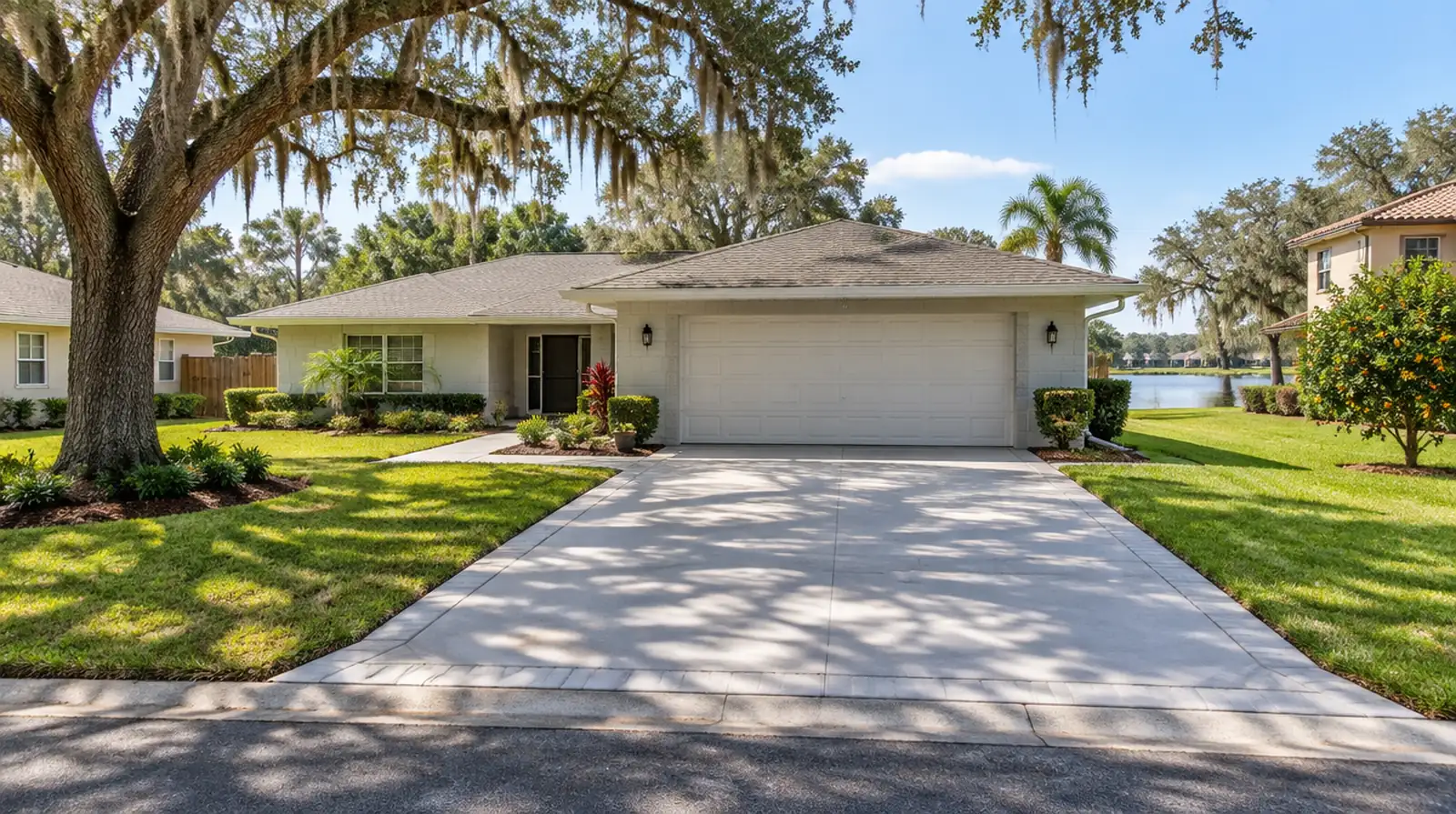
Signs a driveway needs attention
Driveways take more abuse than any other concrete around a home. They bake in the sun, flood in summer storms, carry heavy vehicles and absorb oil, tire marks, rust from irrigation water and fertilizer stains. Over time, the surface pits, the cream wears off to expose sand, and stains spread. Hairline cracks appear where tree roots or settling put stress on the slab.
If the slab is structurally sound but the surface looks rough, resurfacing and coating are far less disruptive and less costly than tearing out and repouring.
What driveway coating involves
Cleaning. Pressure washing, degreasing oil spots and removing rust and organic stains.
Repairs. Cracks are cleaned and filled, spalls are patched and trip edges are ground down.
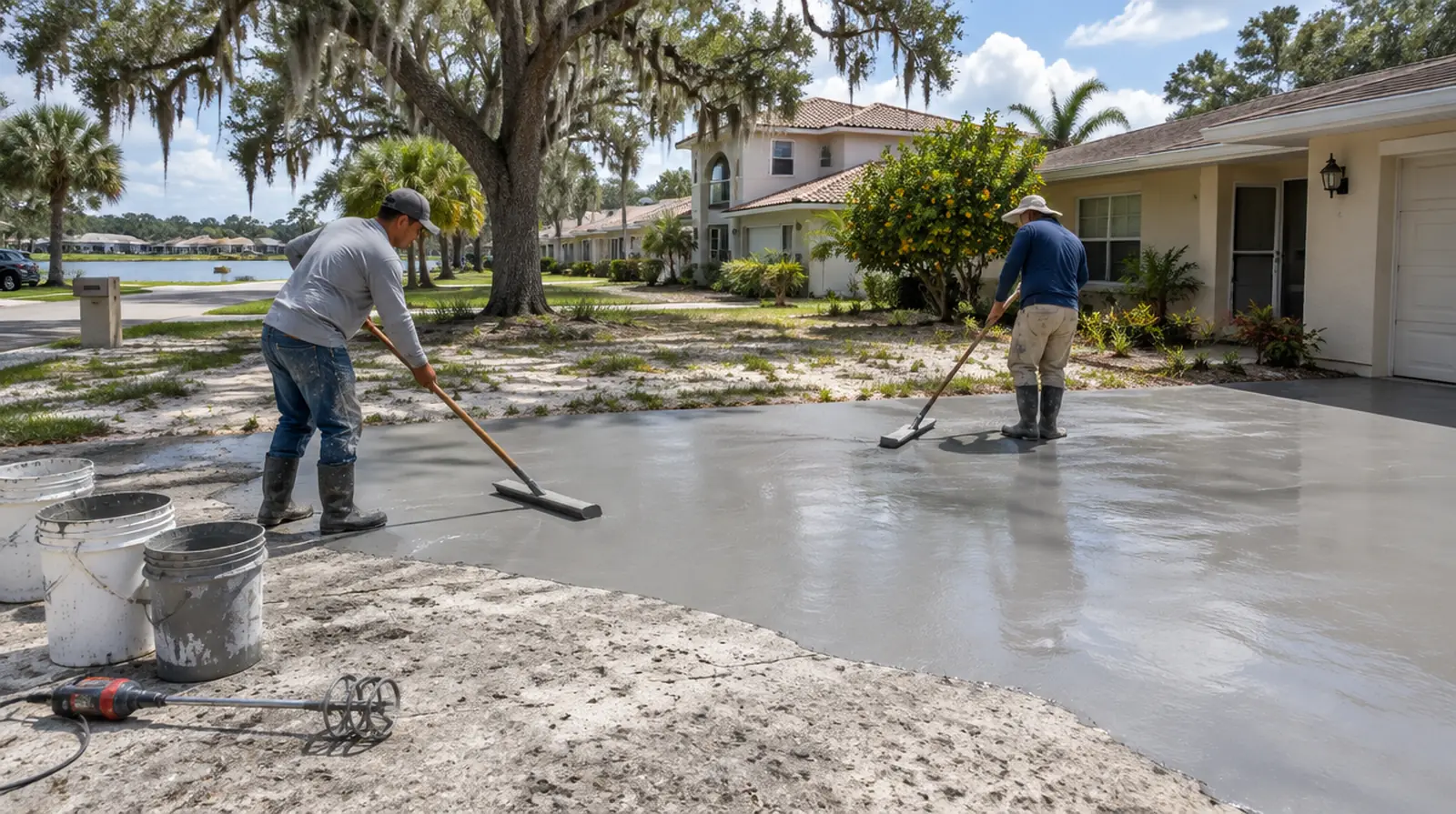
Resurfacing. A polymer-modified cementitious overlay is applied with squeegees and trowels to create a new, uniform surface. It bonds to the old concrete and fills pitting.
Finish. Options include a light broom texture, a knockdown finish or a decorative stencil pattern. Color can be integral or applied as a stain.
Sealing. A breathable sealer protects the new surface from stains and water and helps it resist UV fade.
Decorative options
A plain gray overlay looks clean and new. Many homeowners add a border in a contrasting color, a stenciled tile or brick pattern, or a stained finish that complements the house. These upgrades boost curb appeal noticeably and pair well with a coated garage floor inside.
When resurfacing is not right
Resurfacing cannot fix a driveway that is heaving, sinking or broken into separate pieces. Large cracks that keep moving will reflect through any overlay. During our visit, we evaluate the slab honestly. If replacement is needed, we will say so rather than sell a product that will fail.
Coating versus sealing
If your driveway is in good condition with only light staining, a penetrating sealer may be all you need. Coating and resurfacing make sense when the surface is worn, pitted or blotchy beyond what cleaning can fix.
Traction and heat
Driveways must stay grippy when wet. We avoid glossy films and choose finishes that keep traction in the rain. Lighter colors stay cooler under the summer sun, which matters for bare feet heading to the pool.
Timeline
Most driveway resurfacing jobs take two to three days including cleaning, repairs, overlay, finish and sealer. Foot traffic is typically fine after a day and vehicles after about three days. We schedule around the weather because rain on a fresh overlay is a problem.
Cost
Price depends on square footage, repair work, decorative choices and sealer type. Resurfacing typically costs a fraction of tear-out and replacement.
Care
Clean oil drips promptly, rinse fertilizer off the surface and reseal every few years. Avoid scraping the surface with sharp metal tools or dragging trailer jacks across it.
Questions
How long does a resurfaced driveway last? Many years with resealing. Durability depends on the base slab.
Will cracks come back? Moving cracks can reflect through. We treat them and discuss expectations upfront.
Can you match my sidewalk? We can usually match or coordinate colors and textures.
Oil, rust and tire marks
Before any overlay goes down, the worst stains need attention. Oil that has soaked deep into a driveway can bleed back up through a thin resurfacer if it is not degreased and, in stubborn spots, ground out. Orange rust streaks from well water sprinklers respond to oxalic-based cleaners. Black tire marks near the garage apron usually lift with a degreaser and a rotary surface cleaner. Taking time on this step keeps the new surface uniform and prevents ghost stains from returning a few months after the job is finished.
Price a driveway refresh
Call (407) 794-7487 for a free estimate.