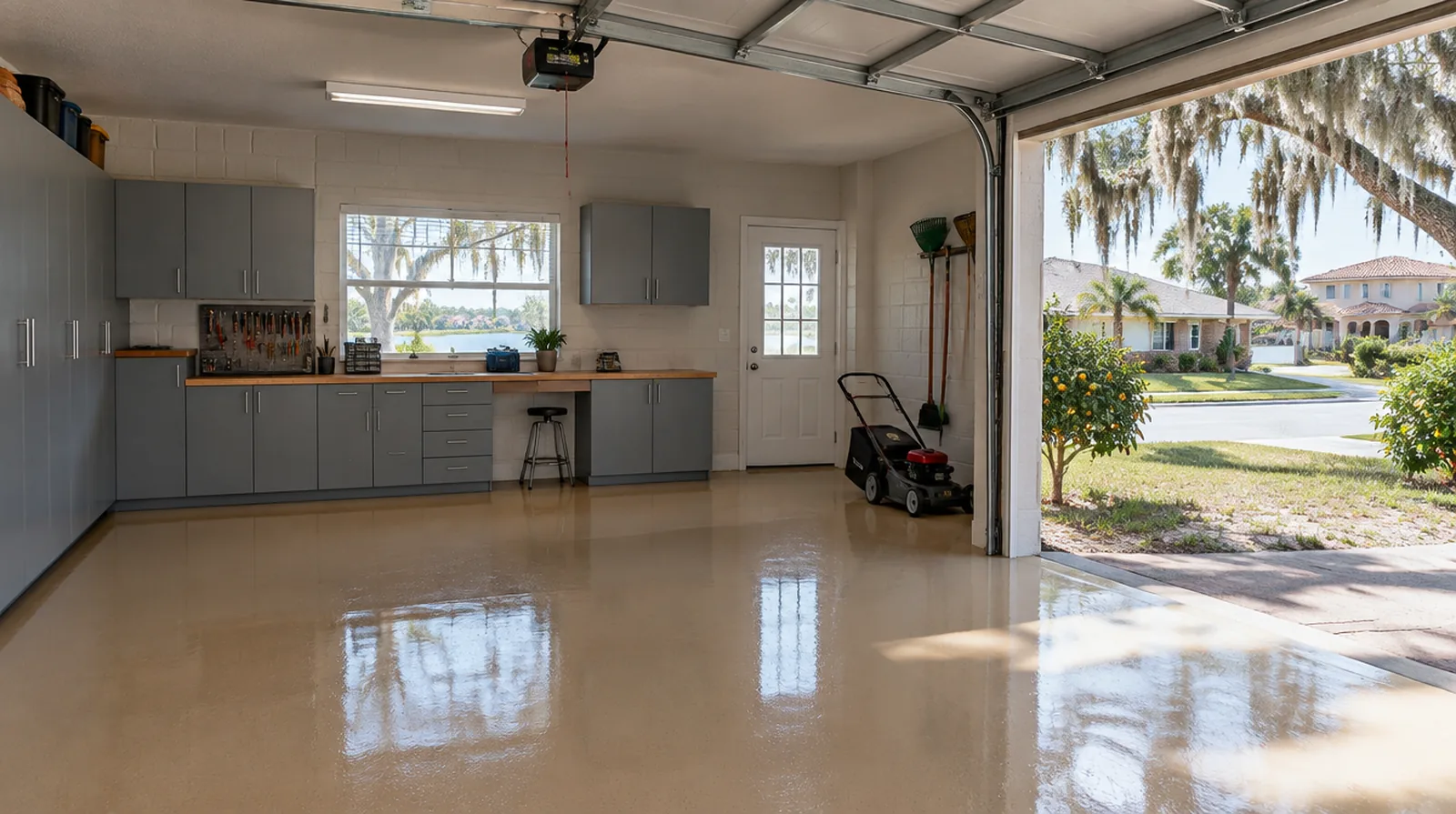
Why garage floors in town wear out
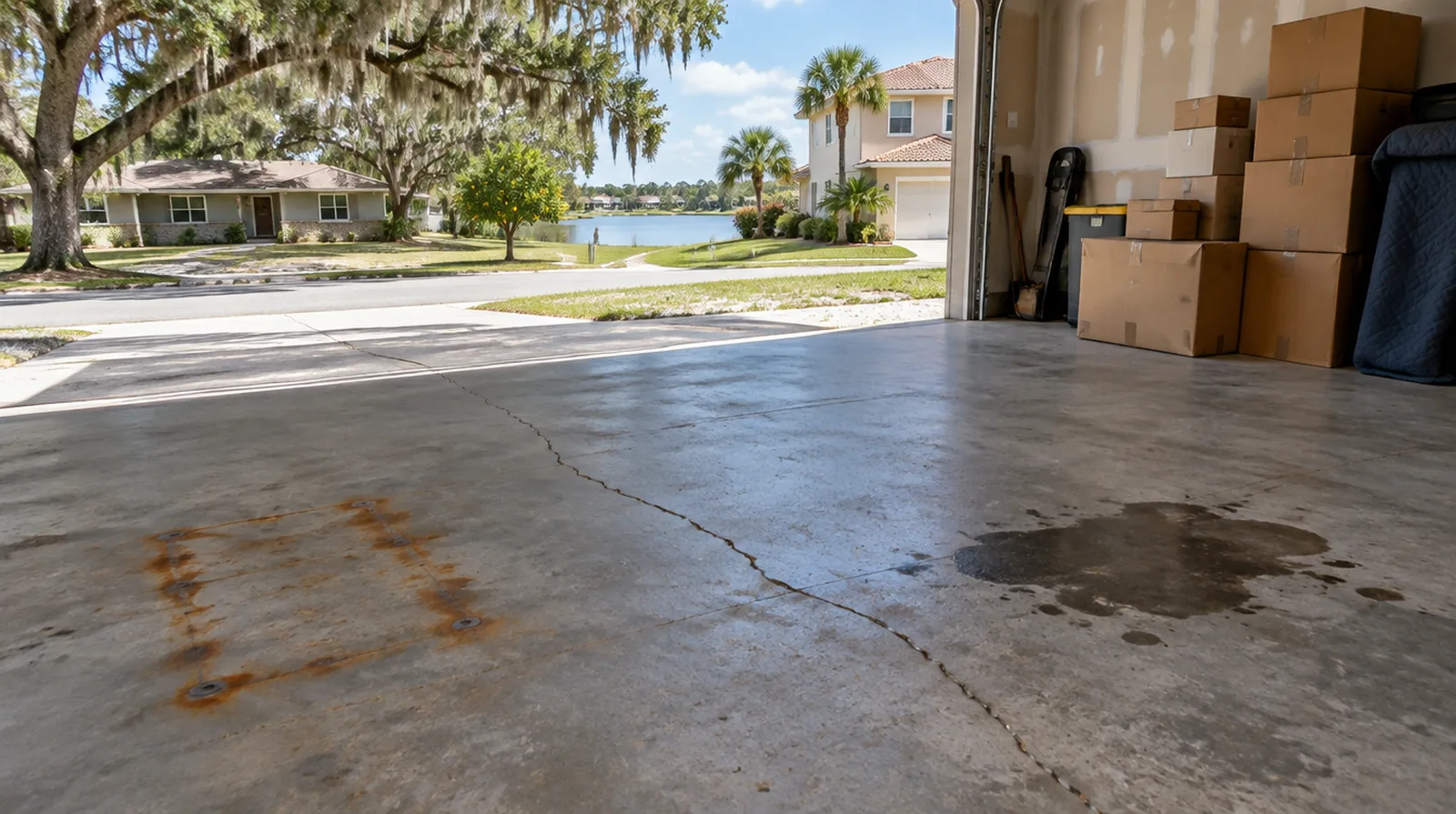
Most garages here started life as bare troweled concrete. Over time the surface takes on oil spots under the engine bay, rust rings from paint cans and toolboxes, and tire marks where the car pulls in. In the older block homes, a coat of porch paint from years past is usually flaking in the wheel paths. In newer subdivisions, the slab is clean but already shows thin shrinkage cracks that radiate from the corners. Neither problem means the concrete is bad. They mean the surface was never protected.
A properly installed epoxy system seals that surface. It keeps fluids from soaking in, gives the room a brighter, finished look and makes cleanup as simple as a mop. It also adds value at resale, because buyers notice a clean, coated garage immediately.
Step by step
Inspection and testing. We check the slab age, look for old coatings and take moisture readings. On borderline results we run a more precise relative humidity test. The numbers decide which primer goes down.
Mechanical grinding. A planetary diamond grinder opens the pores of the concrete and removes paint, sealers, laitance and oil residue. Edges, corners and the area under the water heater are handled with a hand grinder. A HEPA extractor captures dust at the source.
Repairs. Cracks are chased with a diamond blade and filled with polyurea. Pits, chipped joint edges and spalled spots near the door get an epoxy mortar. Repairs are ground flush so they disappear under the finish.
Coating. A penetrating epoxy primer, or a moisture-mitigating version on damp slabs, locks into the profile. A pigmented body coat builds thickness and color. A clear polyaspartic or urethane topcoat adds gloss, scratch resistance and protection from sunlight.
Matching the system to the slab
The sandy ground and rising wet-season water table mean many local slabs carry more vapor than people expect, especially in older homes poured without plastic underneath. A standard primer can lose its bond under that pressure. Our vapor-tolerant primers are designed for exactly this condition. For garages that face the afternoon sun, we always specify a UV-stable topcoat, because aromatic epoxy left exposed will amber within a season.
Hot tire pickup is the other common failure. A car that has just driven on summer asphalt can soften a thin coating and lift it when it pulls away. A high-solids epoxy body coat capped with a hard polyaspartic resists that well.
Colors and finishes
Solid colors look clean and modern. Light gray brightens a dim garage, while tan and charcoal hide dirt longer. Many homeowners prefer a flake broadcast that adds texture and camouflages sand and pollen. For a showpiece workshop or man cave, metallic epoxy creates swirling depth. We bring samples so you can judge them in your own garage light rather than on a phone screen.
Gloss level is adjustable too. High gloss reflects light and shows off color. Satin hides fine scratches and dust between cleanings.
Garages that work for a living
Plenty of local garages double as laundry rooms, home gyms, storage for boats and fishing gear, or hobby shops. Coated floors help in all of those roles. Detergent and bleach spills wipe up. Rubber gym tiles sit level. Sawdust and sand sweep away. If you plan to add cabinets, a car lift or overhead racks, mention it during the estimate so we can schedule and anchor them without damaging the new floor.
How long it takes
A standard two-car garage usually takes two to three days with an epoxy system and one day with a polyaspartic system. You can typically walk on the floor within twelve to twenty-four hours. Cars should wait until the coating has hardened fully, about two to three days for epoxy or a day or two for polyaspartic. Keep strong chemicals off for a week.
We ask that cars and stored items be moved out before we arrive. We mask walls, protect the bottom seal of the garage door and leave the space broom clean.
Pricing factors
Cost depends on square footage, how much old coating needs removal, the number of repairs, moisture conditions and the finish you choose. Flake and metallic systems add material and labor. Every estimate we write is itemized so you can see exactly where the money goes.
Care after installation
Sweep often, because tracked-in sand is abrasive. Mop with warm water and a neutral cleaner. Wipe up oil and pool chemicals promptly. Use a mat under kickstands and jack stands. Avoid dragging steel across the surface. A refresh topcoat years from now can make the floor look new again.
Quick answers
Can you coat over existing paint? No. We grind it off completely because a coating can only be as strong as the layer below.
Will repaired cracks show? Faintly in solid colors. A flake finish hides them almost completely.
Is my new-build slab ready? If it is at least four weeks old and passes a moisture test, yes.
Get a garage floor estimate
Call (407) 794-7487 for a free estimate.