
A different approach to concrete floors
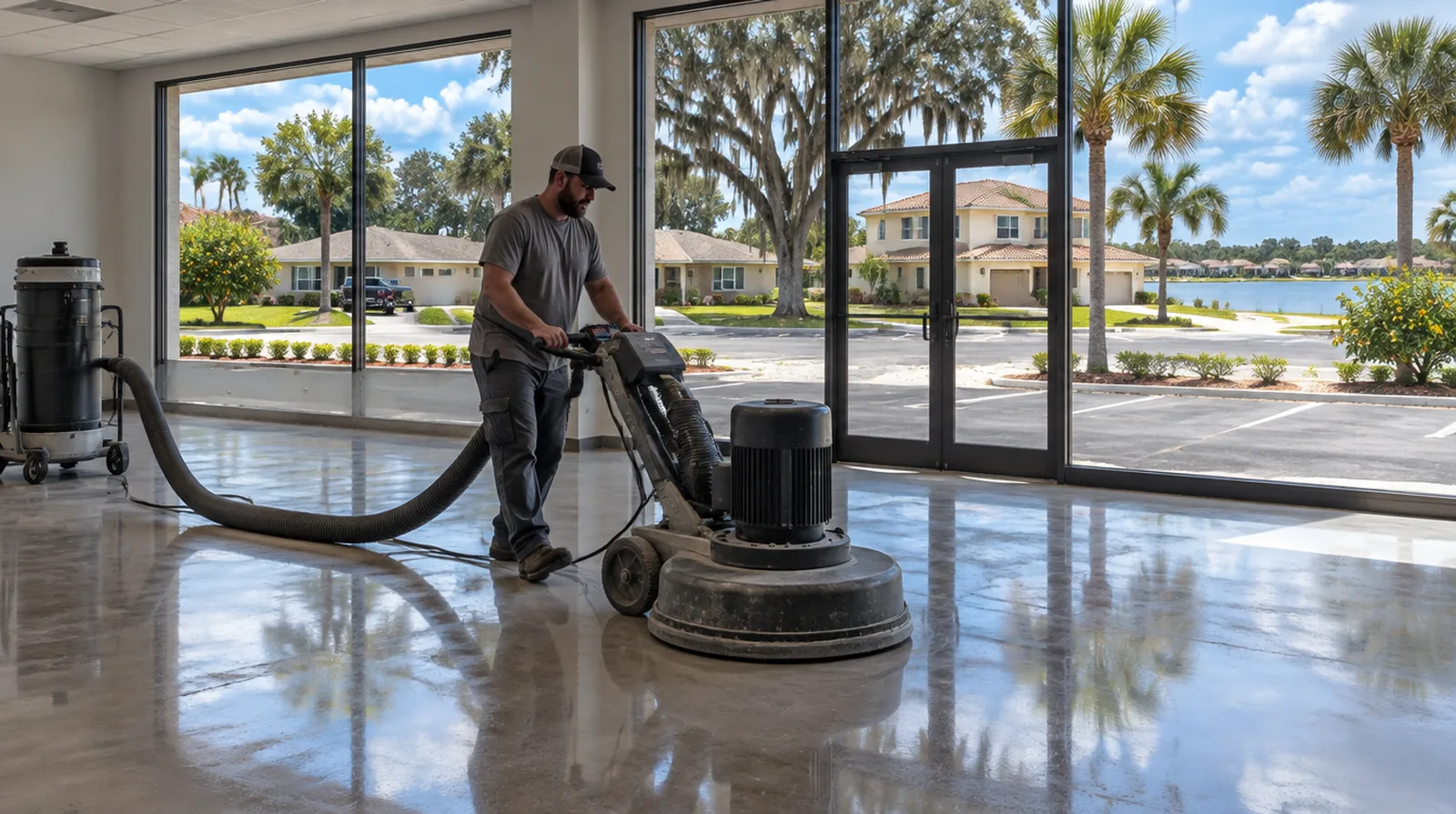
Polished concrete is not a coating. Instead of adding a layer on top, we refine the slab itself. Diamond tooling grinds the surface flat, a chemical densifier hardens the concrete from within, and progressively finer diamonds burnish it until it reflects light. The finished floor is hard, dense, easy to clean and has nothing to peel, chip or delaminate.
Many homeowners discover polished concrete when they pull up old carpet or tile during a remodel. Rather than install new flooring, they choose to polish the slab underneath. Businesses choose it for showrooms, offices and retail spaces because it handles heavy traffic with minimal upkeep.
The process
Removal. Tile, thinset, carpet glue and old sealers come off first. We grind them away rather than using chemical strippers.
Grinding. Metal-bond diamonds flatten the surface and set the level of exposure. Light grinding keeps a creamy finish. Deeper grinding reveals sand or the larger stones in the mix, called aggregate.
Repairs. Cracks, tack strip holes and pits are filled with color-matched filler. Some marks are part of the character of an older slab and can be left on purpose.
Densifying. A lithium or sodium silicate densifier reacts with the concrete, hardening the surface and reducing dusting.
Polishing. Resin-bond diamonds from coarse to fine refine the surface to the sheen you choose, from matte to high gloss.
Guard. A penetrating stain guard improves resistance to spills such as wine, coffee and cooking oil.
Choosing the look
Exposure level and sheen define the final appearance. Cream finishes are smooth and uniform. Salt and pepper shows fine sand. Full aggregate exposure reveals larger stones for a terrazzo-like effect. Sheen ranges from satin to mirror. Color can be added with penetrating dyes for warm browns, cool grays or custom tones.
Every slab is different, and older slabs in particular show their history. We review a test area with you before polishing the full floor so you know what to expect.
Polished concrete and humidity
Because there is no film on top, polished concrete lets the slab breathe. That is a real advantage on older homes and buildings with moisture vapor, where a coating might struggle. Efflorescence can still appear on very wet slabs, but it does not lift a polished floor the way it lifts paint.
Comfort and practical notes
Polished floors stay cool, which many residents appreciate in summer. They are hard underfoot, so area rugs are common in living spaces. They are not ideal for garages where oil drips constantly; for those, garage epoxy offers better stain protection. For retail and office floors, polished concrete is one of the lowest-maintenance options available.
Timeline
A typical residential living area takes two to four days, depending on removal work and the level of exposure. Larger commercial floors may take a week or more, and we can phase them. The floor is usable as soon as polishing is complete; there is no cure time.
Cost
Price depends on square footage, removal work, repairs, exposure level, dye and final sheen. Deeper grinding takes more time and tooling. Over the long term, polished floors are often among the most economical choices because they rarely need replacement.
Care
Dust mop daily in busy spaces and clean with a neutral pH cleaner. Avoid acidic cleaners and vinegar, which can etch the surface. Periodic burnishing with a high-speed pad keeps the shine. Reapply stain guard every few years.
Questions
Will old carpet glue lines show? We grind them off, but faint shadows can remain on some slabs.
Is it slippery? Polished concrete generally meets common slip standards when dry. Keep it clean of dust and spills.
Can you polish a garage? Yes, though a coating is better where oil is common.
Plan a polished floor
Call (407) 794-7487 for a free estimate.