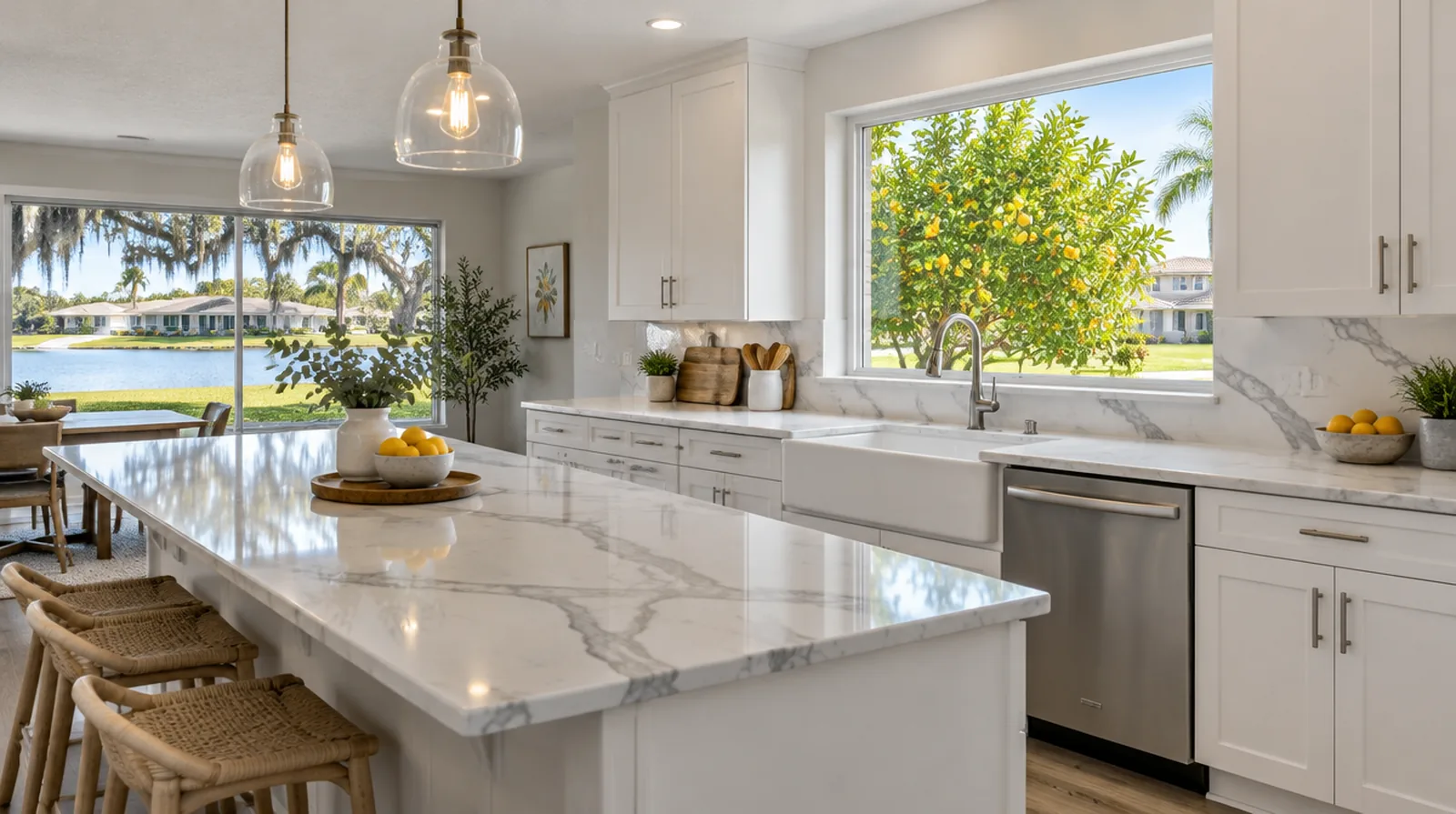
What epoxy countertops are
Epoxy countertops are created by pouring a thick, self-leveling resin over a prepared base. While the resin is still liquid, pigments are worked in to create the look of marble, granite, quartz, agate or solid color. Once cured, the surface is hard, seamless and glossy. Because the resin can be poured over existing laminate, tile or wood in many cases, it offers a dramatic upgrade without the cost and mess of full countertop replacement.
Where they work well
Kitchens. A popular remodel option for homeowners who like the stone look without the price of slab stone.
Bathrooms. Vanity tops are small, quick projects with a big visual impact.
Home bars and outdoor kitchens under cover. Bars and serving counters show off resin beautifully. Fully outdoor counters in direct sun are not recommended because UV can yellow resin.
Laundry rooms and garages. Workbenches and utility counters gain a tough, wipeable surface that pairs with a coated floor.
Commercial counters. Reception desks, salon stations and coffee bars.
The process
Consultation and design. We review the look you want with samples and photos. Marble styles with white bases and gray or gold veins are especially popular.
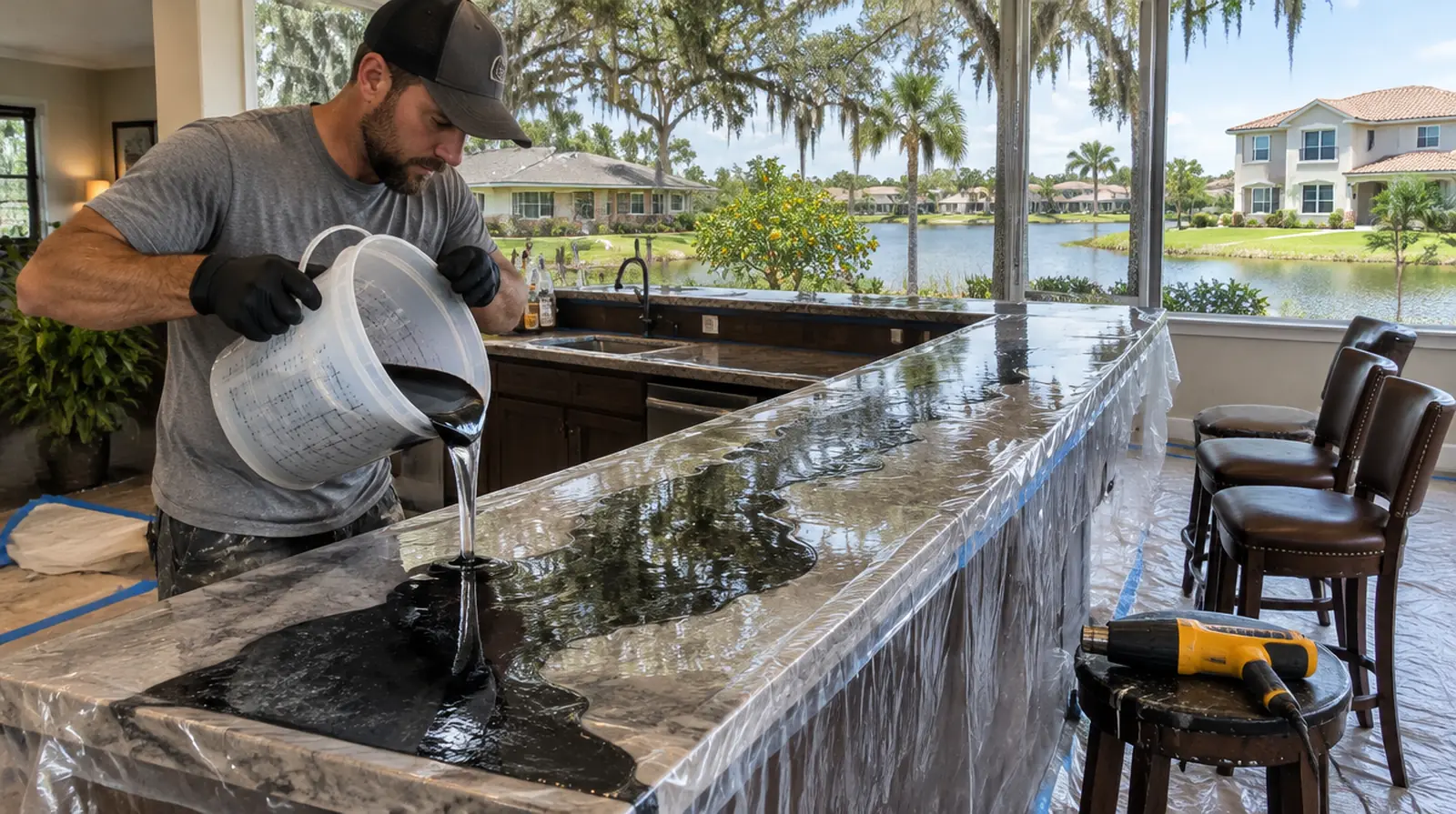
Preparation. Existing surfaces are cleaned, sanded and repaired. Loose laminate is re-glued, seams are filled and edges are built up as needed. Cabinets, floors and walls are protected with plastic sheeting.
Primer and base. A primer coat seals the substrate, followed by a base color.
Decorative pour. The main layer of resin is poured, and pigments are manipulated by hand to form veins, swirls and depth. A heat gun removes bubbles.
Flood coat. A final clear coat adds depth, gloss and a smooth finish. Edges are sanded and finished.
Timeline
A typical kitchen takes two to three days of work, with light use after about three days and full cure in roughly a week. Sinks and faucets are usually reinstalled once the resin hardens. We plan the schedule so you lose use of the kitchen for as little time as possible.
Durability and care
Cured epoxy is waterproof, seamless and resistant to most household spills. It is not as heat resistant as stone, so use trivets under hot pans. It can scratch under knives, so use cutting boards. Clean with mild soap and water and avoid abrasive pads. Minor scratches can often be polished out, and a fresh clear coat can restore a worn surface years later.
Pairing with your floors
Many customers coordinate a countertop with a metallic floor in a bar or game room, or a utility counter with a garage floor system. We can design them together so colors and finishes complement each other.
Cost
Price depends on square footage, edge details, the complexity of the design and the condition of the existing counters. Epoxy countertops typically cost less than quartz or granite while delivering a custom look.
Questions
Can you pour over laminate? Usually, if it is well bonded and in decent shape.
Will it look fake? A skilled pour looks convincing. We show examples before you decide.
Is it food safe? Once fully cured, the epoxies we use are suitable for food contact surfaces.
Garage workbenches and utility tops
A plain plywood workbench soaks up paint, oil and glue within weeks. A pour of solid-color or clear epoxy seals the wood and creates a hard top that wipes clean and resists most shop chemicals. These projects usually take a single day of preparation and pouring with a short return visit to sand drips from the edges. When paired with a freshly coated garage floor and wall cabinets, a resin workbench completes a clean, organized workspace that is easy to keep that way.
Plan your countertops
Call (407) 794-7487 for a free estimate.