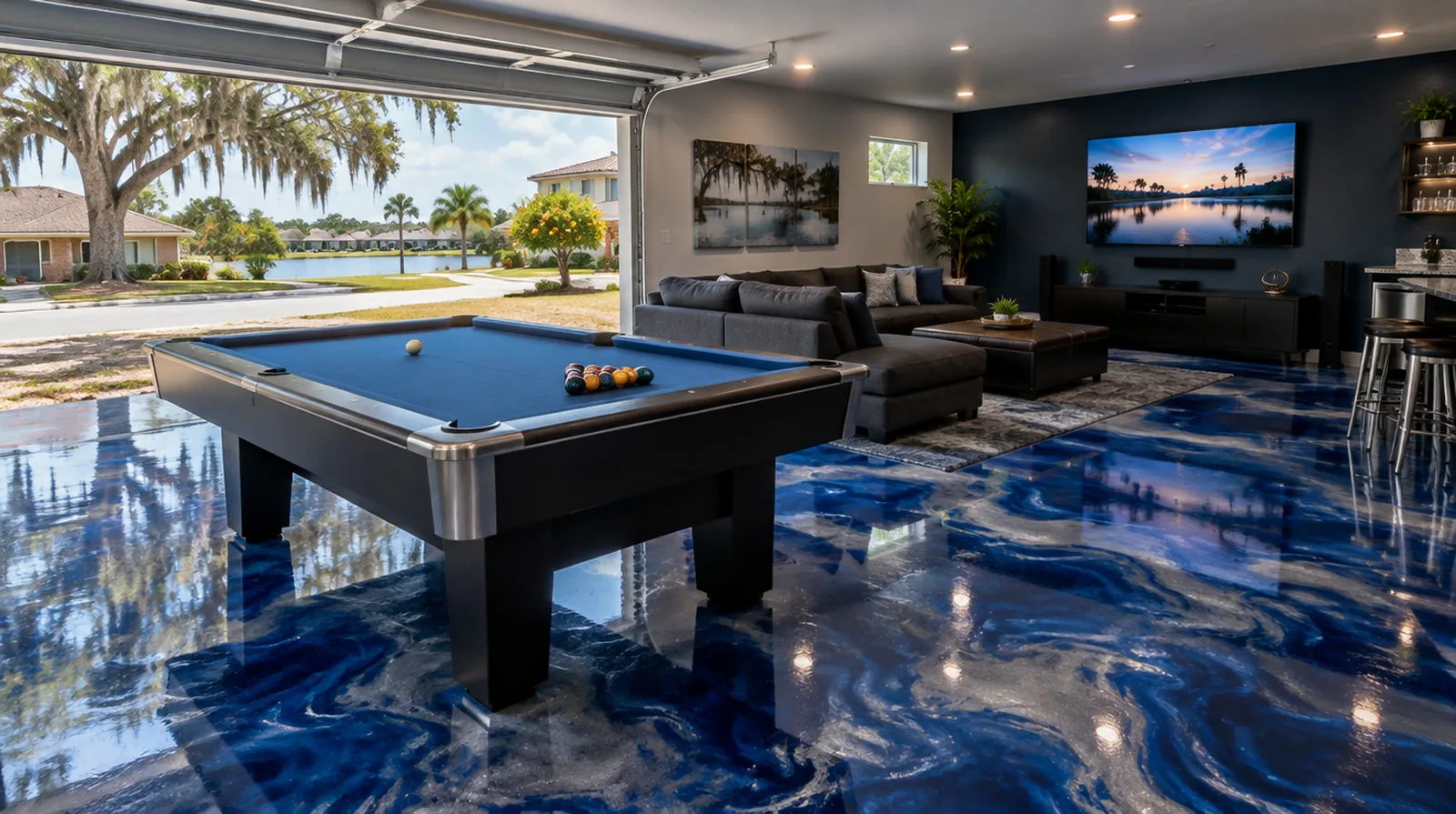
A floor with depth instead of a flat color
Metallic epoxy uses mica-based pearlescent pigments suspended in clear resin. As the resin is spread and worked, the pigment shifts and settles into ripples, veins and clouds that catch light differently from every angle. No two floors look alike. The result can resemble polished stone, liquid metal or moving water depending on the colors and the technique.
Homeowners choose metallic floors for spaces they want to show off: converted garages, game rooms, home theaters, bars and offices. Businesses use them in showrooms, salons, boutiques and event spaces where first impressions count.
Preparation matters even more
Because metallic epoxy is glossy and reflective, it highlights any flaw underneath. Low spots collect pigment, high spots look thin, and filled cracks can show as lines. We grind every slab thoroughly, fill and feather cracks and pits, and apply a skim coat where the floor is uneven. On slabs with moisture issues, which are common in older homes here, we lay down a vapor-tolerant primer before any decorative work starts.
How the pour works
After priming, we roll on a pigmented base coat, usually black, white or a mid-tone that sets the background color. Then the metallic layer is mixed and poured in sections. Our installers move the material with rollers, trowels, brushes and sometimes air blowers to create the movement you want. Some customers like soft, cloudy transitions. Others want bold veining that looks like marble. We talk through reference photos before installation so the look matches your expectations.
Once the metallic layer cures, we add a clear topcoat. In garages and sunny rooms, it is a UV-stable polyaspartic or urethane to prevent yellowing and to add scratch resistance.
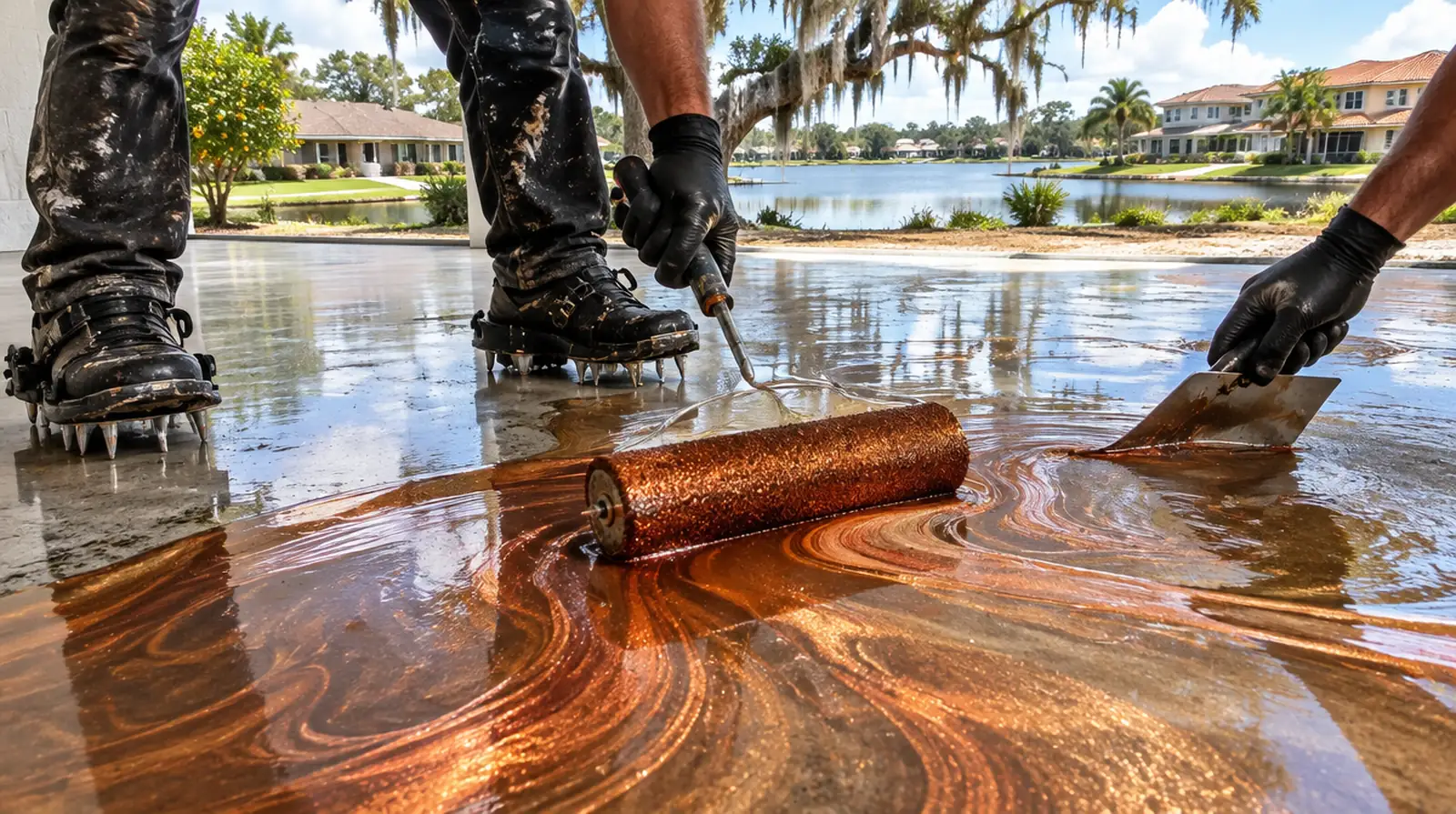
Popular color combinations
Charcoal and silver creates a modern industrial look. Copper and bronze over black feels warm and rich. Ocean blues and whites suit a coastal style. Pearl white with gray veining imitates marble. We can blend two or three pigments for custom effects and will show samples on boards before you decide.
Where metallic works and where it does not
Metallic floors excel indoors in rooms with good lighting and moderate traffic. In a working garage, they look dramatic, but scratches from tools and tires will show more than on a flake floor. For heavy-use garages, we usually recommend a harder topcoat or a satin sheen. Around pools and outdoors, metallic is not a good choice because the glossy surface becomes slippery when wet.
Slip resistance
A bare metallic floor is smooth. Where traction matters, we add a fine clear aggregate to the topcoat. It slightly reduces the mirror effect but keeps the floor safer, especially near entrances where rain gets tracked in during afternoon storms.
Timeline
Metallic floors usually take three to four days: one for preparation and priming, one for the base, one for the metallic pour and one for the topcoat. Light foot traffic is fine about a day after the final coat. Furniture can go back after two to three days, and full cure takes about a week.
Cost considerations
Metallic systems use more material and more skilled labor than solid colors. Price depends on area, preparation needs, number of colors and the topcoat chosen. Expect it to cost more than a standard garage system. Our itemized estimate explains each part.
Care
Dust mop daily in busy rooms. Clean with a neutral cleaner and a microfiber mop. Use felt pads under furniture and walk-off mats at doors to catch sand. Avoid dragging heavy items. A fresh topcoat can restore the shine later.
Questions
Can I see my exact pattern first? Not exactly, because each pour is unique, but samples and photos of past floors give a strong preview.
Is it durable? Very, with the right topcoat. It resists stains and chemicals like any quality epoxy.
Can it go over tile? We recommend removing tile and coating the concrete for the best bond.
Discuss a metallic floor
Call (407) 794-7487 for a free estimate.